(RNS) — This week marks two years since the United Methodist Church voted to remove the last barriers to full equality of LGBTQ+ members. The removal of those punitive measures came in the wake of a schism that saw the departure of more than 7,600 congregations, or about a quarter of U.S.-based Methodist churches.
Now comes the postmortem.
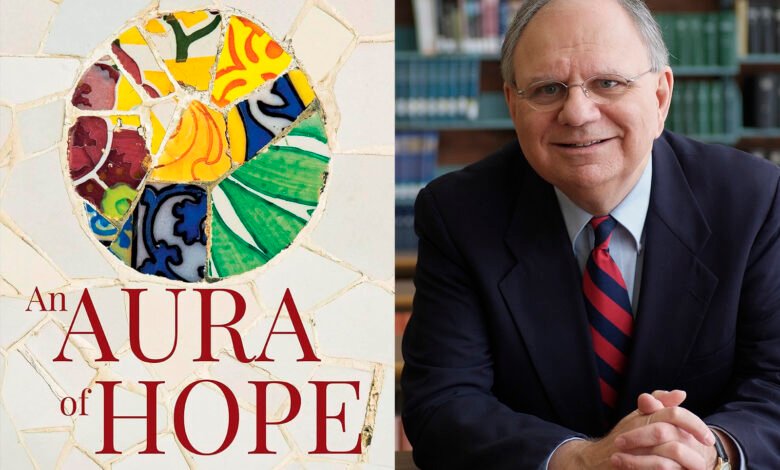
Lovett Weems Jr., retired director of the Lewis Center for Church Leadership at Wesley Theological Seminary in Washington, D.C., has penned an analysis of the forces that led to the schism and how the denomination might recover. A lifelong United Methodist who has studied available data, Weems suggests a practical way forward for its 4 million U.S. members.
He begins the book — released by Abingdon Press in March — on a note of mourning. He will be buried next to his parents in the church cemetery of the Mississippi congregation where he grew up. But that church has disaffiliated and is no longer United Methodist.
Weems is convinced most United Methodists might have been able to tolerate their differences on sexuality, but the growing political polarization around the country left little room for disagreement or compromise — until recently, a cherished Methodist ethic. Practically, though, what allowed churches to leave, Weems writes, was the temporary lifting of a legal provision that ensures church properties belong to the denomination. When churches realized they could leave the denomination and take their property with them, they did.
The second half of Weems’ book deals with the future. The United Methodist Church had been shrinking even before the schism. In 2024, the median attendance at its churches was 29 people, and many of those people are older.
If Francis Asbury, the pioneering Methodist bishop, found the key to church growth in sending pastors on horseback out to the frontier, today’s growth strategy might be reversed. If the church wants to reach younger, more ethnically diverse people, it must focus on densely populated urban areas, Weems writes.
RNS spoke with Weems about his book, “An Aura of Hope,” and new realities facing the United Methodist Church. The interview was edited for length and clarity.
RELATED: With a final flourish, United Methodist conference eliminates all anti-LGBTQ policies
You point out that when you die, you’re going to be buried in a church that has disaffiliated from the United Methodist Church. I wonder if that’s true of a lot of other United Methodists as well.
Well, I’m sure that is the case, at least for folks of my generation that often came from churches that had cemeteries connected with them. When I went into ministry, clergy often came from small churches and from rural churches. That’s not necessarily the same today, where clergy are more likely to come from suburban or urban churches and churches that tend to be somewhat larger.
You write that the schism in the church was avoidable. How so?
(In 2019), the delegates to the General Conference from the United States supported what was called the One Church Plan that would have permitted the church to omit negative language regarding homosexuality, and at the same time, not require anyone to violate their own convictions. The One Church Plan would have passed with two-thirds of the U.S. votes, but with the votes of all the delegates, including the international delegates, that was not possible, and so it failed by a relatively small number of votes.
A major part of (the schism) was permitting churches to leave with their property. The United Methodist Church has a trust clause, where the property of a church is held in trust. When someone leaves a church, they leave just as they came, one by one; they don’t take property with them. The provision for leaving said that the only reason for leaving had to deal with conscience related to human sexuality. However, we know that once that door was opened, many churches took this as an opportunity to leave over a variety of issues. Compromise of any kind was just something that people were not open to talking about.
You talk a lot about how the way forward now is actually opposite the way that the United Methodists initially grew, which was to go west and reach rural areas. Explain that.
What I’m proposing is simply going back to what in essence, was the original question: Who and where are the people God has given us today? And so, when Bishop Francis Asbury was looking at things in the late 1700s, early 1800s, he concluded that the preachers were going to stay around New York and Philadelphia, where life was a little easier, but the people were moving westward. So, he sent ministers to where the people (were) going. It worked for over 100 years, but by the early decades of the 20th century, some of that movement had begun to shift.
We are out of sync with four key areas that emerge. One is geographic. We are more represented in the counties where one-third of the population live than we are in the counties where two-thirds of the population live. One is age. The age makeup of United Methodists is significantly older. Another is racial. The percentage of people of color tends to be about 10% across mainline churches, and vastly greater — in the 40s or higher — in the population as a whole. And then economic. United Methodism has always thought of itself as a middle-class church, and some of the writing of the 1950s named Methodism as the kind of prototypical middle-class church. But in the ’70s and ’80s, that movement stopped, and so what’s happened is the middle class has shrunk in size. The people that are poor represent a somewhat larger portion, but the people above the middle class, that percentage, has grown larger as well.
We’ve lost connection with (poorer) people in our communities. There was a time when the makeup of a Methodist church was very similar to the makeup of the population of the community. That’s no longer the case. People who are regular church attenders tend to be older, more educated, more well to do, more likely to be married — all those things that set them apart from the general population in their community.
If you were a bishop now, would you focus on the larger, more urban churches?
I would ask, where do two-thirds of the people live? Then, I would look at churches with 250 or more in worship attendance. Then I would see what’s happened to them in the last 10 years. And I’d be looking at two things in particular. One is the number of deaths, and the other is the number of new adherents. And in a sense, that matches what demographers talk about as natural increase and natural decrease. I would see which of these churches have more new believers than deaths.
Next, I’d want to begin learning from those churches. Where are they located? What have they done? What’s different there? I would bring them together, and I would say, “To whom much is given, much is expected. We want to encourage you. We want to learn from you, and we invite you to share what you’re learning with other churches.”
The Rev. Adam Hamilton, the pastor of the largest United Methodist church in Kansas, is running now for the U.S. Senate, if he wins the Democratic primary. What are the chances nowadays of a United Methodist pastor winning?
Each year there’s a denominational breakdown of members of Congress. When I first started looking at those things, in the ’60s and ’70s, Methodists were at the top by far, and that’s no longer the case. I think now both James Talarico (the Democratic nominee for the U.S. Senate in Texas) and Adam Hamilton provide a mainline voice that we’ve really not had. They both are excellent spokespeople for mainline Christianity. And Adam, I think at this point, has a chance of winning if he can get enough exposure; people will vote for him. He is one of those people that could do anything, and just happens to be a preacher. He is clearly the most gifted United Methodist clergy of his generation. Adam knows how to handle himself. He can be clear about what he believes, but it is not done in a judgmental way. So I’m hoping that Adam can bring out the better angels of that Kansas spirit.
RELATED: Kansas last sent a Democrat to the Senate in 1932. A megachurch pastor aims to change that.
Source link