
(RNS) — Pope Leo XIV arrived in Algeria on Monday (April 13), bringing attention to its little-known interfaith organizations and efforts that have been functioning discretely for many years. They help comprise a unique manifestation of faith in a country — Africa’s largest in area — where fewer than 1% of the nation’s nearly 48 million people are Christian.
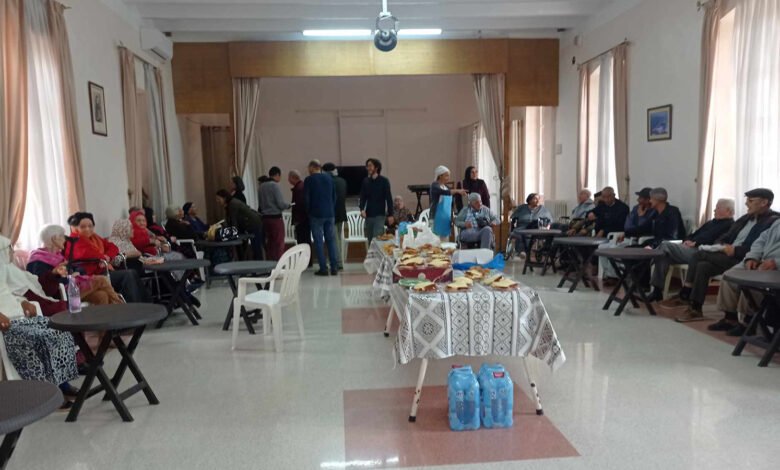
One is the Focolare movement, a spiritual unity network that came to Muslim-majority Algeria in 1966. Modeled after an Italian lay Catholic movement, its activities are animated by Muslim members, mostly women, participating in small groups across the country, whether helping at local elderly centers, tutoring students or learning together.
The late Chiara Lubich founded Focolare (Italian for “hearth”) in 1943, out of her experience finding community among strangers sheltering underground during bombing raids over Trento, Italy, during World War II. Pope Paul VI recognized it in 1964 as a private, universal association with the formal name “The Work of Mary,” to emphasize dedication to selfless love.
The once-local group spread worldwide under Lubich’s charismatic influence. Today, the network includes over 100,000 consecrated men and women committed for life, and several million sympathizers active in 150 countries. Many of the communities remain active today, including in Algeria.
An influential moment for the Algeria Focolare movement came in its early years when the movement’s community of Catholics, known as focolarini, brought a sick Algerian child to the hospital in the middle of the night, insisting doctors prioritize his care. The child got better, and his father, a Muslim imam, out of gratitude, offered to teach the Catholics about his faith, even providing courses at the Focolare center.
“The unique aspect of the Focolare movement in Algeria is that all its members are Muslim, mainly women, thanks to the charism of Chiara, which we strive to transmit first and foremost through our own lives,” said Didier Lucas, a consecrated focolarini, who has lived in the Tlemcen community since 2009. He also did a three-year stint there beginning in 1978.

A 2024 academic study of the “non-proselytizing presence” of the Catholic Church in Algeria highlighted the Focolare movement’s form of spirituality that makes it nonthreatening yet influential.
Nadjia Kebour, an Algerian lecturer who teaches Islamic studies at the Pontifical Institute for Arabic and Islamic Studies in Rome, said, “In Algeria there is a dialogue of life especially with Christian communities, for example, the Focolare movement and the Little Sisters of Jesus, who live among Muslims and share their lives with Muslims.”
The Algeria branch opened after an abandoned Benedictine abbey in northwest Algeria was donated at no cost except the expense of refurbishing it, and Lubich decided to plant the movement’s first community of Catholic men in the country. She sent a Frenchman and two Italians, including Ulisses Caglione, a mechanic and master builder. The three drove a Citroën vehicle from Paris to the abbey in Tlemcen, a mountainous area known for exquisite Moorish architecture, about 30 miles from the Moroccan border.
They arrived in October 1966, hoping to create a Dar es Salaam, or House of Peace, which is also a name for paradise in the Quran.
“The movement grew slowly, step by step, without a real plan,” Lucas said. “Focolare came without knowing exactly what we were looking for, and what evolved is what you see today.” The community grew through local friendship, offering a “dialogue of life” emphasizing mutual encouragement, he added.
He continued, “Through our interactions, some return to their (Muslim) faith, while others rediscover a renewed sense of purpose to live Islam more fully. This is a source of contemplation for us: how can a Catholic charism attract people from other religions? The answer lies in the mutual love of one’s neighbor, a concept found in many religions in the form of the Golden Rule, ‘Do unto others as you would have them do unto you.’”
Caglione was ordained as a priest in 1985 by the bishop of Oran, Pierre Claverie, who was violently killed more than a decade later in the country by a car bomb. Caglione refused to leave Algeria during the “dark decade.”
When Caglione died in 2003, members of the much-expanded Tlemcen community wrote to Lubich explaining, “Ulisses was for us a link between Christianity and Islam. … We learned to listen without prejudice, without judgement. He taught us to do everything out of love. He taught us to be love. He always manifested his love for God. He was for us the model believer.”
The former abbey is now known as Mariapolis Ulisse, following other Focolare “Mary cities” established around the world, including in Argentina, Italy, Kenya, the Philippines and the United States. The latest resident arrived two months ago in Tlemcen: Giordano Barbosa, a Brazilian whose parents are members of the movement. “My lullaby songs were the ones we sing at the Mariapolis in Brazil,” he said.
In “Beyond Dialogue,” a 2019 documentary on the Focolare in Algeria, Muslims of all ages offered testimony about seeking God in this unusual, supportive environment.
Kebour attended a retreat at Mariopolis Ulisses and witnessed “a group of young Algerians who came from different regions to live together in a spirit of profound respect,” she said.
“What struck me was their simplicity and sincerity,” she said. “They were not engaging in theological debate but living fraternity.”
Kebour will be in Algeria for the pope’s visit to participate in events.
“Interreligious dialogue can be a matter of shared life,” Kebour told RNS. “After years of practicing such dialogue, I would say the result of interreligious encounters is the interior transformation of the individual. The dialogue does not change doctrine, but it changes the heart. Then, personal transformation allows social transformation by creating real tolerance and esteem.”
Born in the Democratic Republic of the Congo, Gaston Lulu Ngomoya encountered the Focolare movement in 2009 at age 16, when his school choir sang at a Mass marking the one-year anniversary of Lubich’s death. After the program, members explained their faith practice.
“I was deeply touched by what is called in Focolare the ‘Art of Love,’ presented in six points: love others as yourself; love everyone; make yourself one with those who suffer and those who rejoice; be the first to love; love your enemies; and see Jesus in others,” said Lulu, who was consecrated in 2016, after formation in Italy.
He then moved to a Mariapolis Center in Kenya, then to Angola, where he served as the Archdiocese of Luanda’s treasurer. Last year, he came to Algeria’s capital of Algiers, where separate Focolare houses for men and women are located.
“True unity requires diversity to be authentic — it is not the same as uniformity,” Lulu said. “Here in Algeria, we are living this commitment as Christians together with Muslims in a dialogue of life.”
Source link